
What projects may need underground electrical wiring?
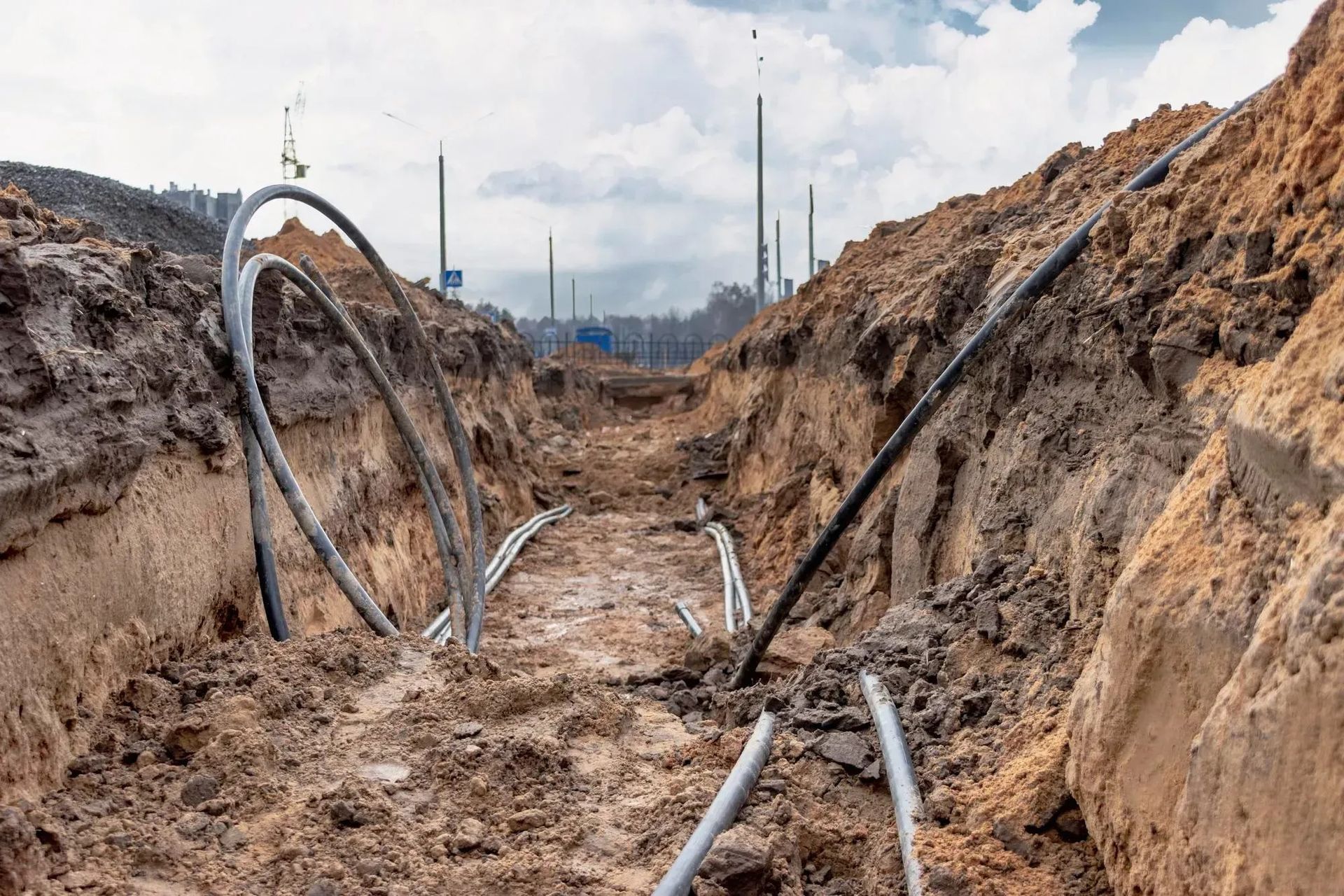
Detached garages, workshops, gates, landscape equipment, outbuildings, and other exterior loads may require underground conduit and conductors.
682-422-3499
info@atelectricllc.com
Need safe, dependable subterranean power for a detached workshop, swimming pool, automated gate, or outdoor kitchen? A.T. Electric LLC delivers master-level underground electrical trenching, conduit placement, fault locating, and overhead-to-underground conversions across Mansfield, Arlington, and the broader DFW area.
Clear answers to common questions customers ask before requesting this electrical service.
Detached garages, workshops, gates, landscape equipment, outbuildings, and other exterior loads may require underground conduit and conductors.
Utility locating, routing, conductor size, conduit, burial requirements, equipment load, and the connection point should be evaluated before work begins.
Yes, when the electrical design, feeder size, grounding, and panel requirements are appropriate for the building and intended loads.
Burying electrical power lines beneath code-approved conduit provides superior safety, weather resilience, and clean property aesthetics compared to unsightly overhead wires.
Overhead service lines risk contact with tree branches, tall equipment, and ladders. Subterranean lines completely eliminate electrocution risks and dangerous low-hanging wires across your yard.
Severe North Texas thunderstorms, high straight-line winds, and ice storms routinely pull down overhead conductors. Underground conduit protects circuits from wind, falling limbs, and weather outages.
Say goodbye to unsightly overhead cables cutting across your landscape or roofline. Underground electrical work creates unobstructed views and clean sightlines that boost your property's value.
Running 60-amp to 100-amp subpanels to detached workshops, guest houses, and metal barns requires dedicated subterranean conduit designed to handle continuous heavy machinery loads.
NEC Article 680 mandates strict burial depths and setback distances for pool pumps, underwater lights, and hot tub feeds to prevent fatal water-to-electricity contact.
High-impact Schedule 40 and Schedule 80 PVC conduits resist ground shifting, soil acidity, and rodent damage, delivering safe power for decades with zero routine maintenance.
Shallow trenching is one of the most common and dangerous DIY errors. Texas soil shifting and future landscaping can expose improperly buried lines. Under NEC Table 300.5, our electrical team plans trench depth and cover around applicable requirements:
| Wiring Method / Material | Residential Lawns | Driveways & Parking |
|---|---|---|
| Direct Burial Cable (UF-B) | 24 inches | 24 inches |
| Rigid Nonmetallic Conduit (PVC) | 18 inches | 24 inches |
| Rigid Metal Conduit (RMC / IMC) | 6 inches | 18 inches |
| Low-Voltage Landscape (12V–30V) | 6 inches | 18 inches (in conduit) |
From primary utility lateral feeds to secondary backyard subpanels, we execute all subterranean projects with commercial-grade equipment.
Convert outdated overhead service drops to clean underground lateral feeds. We coordinate with Oncor and local city building inspectors to trench, lay conduit, and mount new meter bases.
Run dedicated 50A, 100A, or 200A subpanels to outbuildings. We calculate voltage drop over long distances, sizing copper conductors so equipment operates at full power without motor sag.
Complete subsurface wiring for pool equipment pads, chlorinators, variable-speed pumps, automated covers, and GFCI-protected hot tub disconnect panels meeting strict NEC Article 680 codes.
Lost power to your shed or yard lights? We use advanced underground cable locators and time-domain reflectometers (TDR) to pinpoint wire cuts and shorts without digging up your entire lawn.
Trench and route durable power and sensor wiring to automated electric driveway gates, intercom keypads, and safety loop sensors, engineered to withstand heavy vehicle crossings.
Subsurface conduit supply for outdoor refrigerators, island grills, gas-igniters, weather-resistant GFCI outlets, and low-voltage landscape lighting transformers.
We prioritize property protection, landscape preservation, and strict municipal building codes on every excavation.
Before breaking ground, we call Texas 811 (Dig Tess) to mark gas, water, and telecom lines, ensuring safe, accident-free excavation.
Using compact mechanical trenchers, we excavate narrow trenches to exact code depths (18"–24") while minimizing turf disruption.
We glue heavy-duty Schedule 40/80 PVC conduit, install expansion sleeves for shifting clay, pull wet-location THWN-2 wires, and terminate to panels.
We install warning ribbon 12 inches above pipe, backfill the trench with tamped soil, test circuit continuity, and restore your lawn smoothly.
Over 25 years of electrical experience. We size wire gauges to compensate for long-distance voltage drops across large Texas properties.
We own dedicated trenching, wire pulling, and subterranean fault-locating tools to complete jobs efficiently with minimal yard damage.
We provide detailed written estimates that can outline materials, excavation, backfill, permitting considerations, and the proposed electrical scope.
Family-owned in Mansfield, we strictly adhere to TDLR and city codes so your yard is safe for children, pets, and future landscaping.
Fill out our work request form below. Our electrical team will review your project requirements and get back to you promptly.
Under NEC Table 300.5, burial depth depends on the wiring method. Nonmetallic PVC conduit (the standard used by A.T. Electric LLC) requires a minimum of 18 inches of cover under residential lawns and 24 inches under driveways. Direct burial cable (UF-B) requires 24 inches. Rigid metal conduit (RMC) can be buried at 6 inches. Low-voltage landscape lighting (12V-24V) requires a minimum of 6 inches.
While direct-burial UF-B cable is allowed by code, rocks, ground shifting, and burrowing pests in North Texas clay soil frequently nick the bare vinyl jacket, creating ground faults. Installing wiring inside solvent-welded Schedule 40 or Schedule 80 PVC conduit provides a rigid mechanical barrier, allows future wire upgrades without re-trenching, and requires a shallower trench (18 inches vs 24 inches).
Yes. Texas state law requires calling 811 (Texas Dig Tess) at least two business days before beginning any mechanical excavation. A.T. Electric LLC manages this entire process on your behalf. The utility companies come out and paint or flag the location of buried public gas, water, electric, and fiber optic lines to prevent hazardous dig-in accidents.
Yes. Overhead-to-underground conversions are a common upgrade for older neighborhoods. We trench from the utility pole or pedestal to your home, install heavy rigid conduit, mount an underground-approved meter socket, update your grounding system, and coordinate with Oncor and municipal inspectors to make the switch smoothly in a single day.
We use precision underground fault locators and Time-Domain Reflectometry (TDR). By sending a specialized electronic high-frequency signal down the conductor and tracing it above ground with an A-frame receiver, we pinpoint the exact foot where the wire is severed or grounded. We then excavate a small 2-foot hole to perform a code-approved underground splice rather than trenching your entire lawn.
Our electrical team is based in Mansfield and serves surrounding DFW communities.